
“`html
The Modern Trojan Horse: Why Your Smart Home Isn’t Just Yours
In the last decade, we have witnessed a domestic revolution. We transitioned from manually flipping switches and locking doors to commanding our homes with our voices. The promise of the “Smart Home” was one of ultimate convenience: lights that know when you’re home, thermostats that save you money, and refrigerators that tell you when you’re out of milk. However, beneath the sleek aesthetic of brushed aluminum and glowing LEDs lies a darker reality.
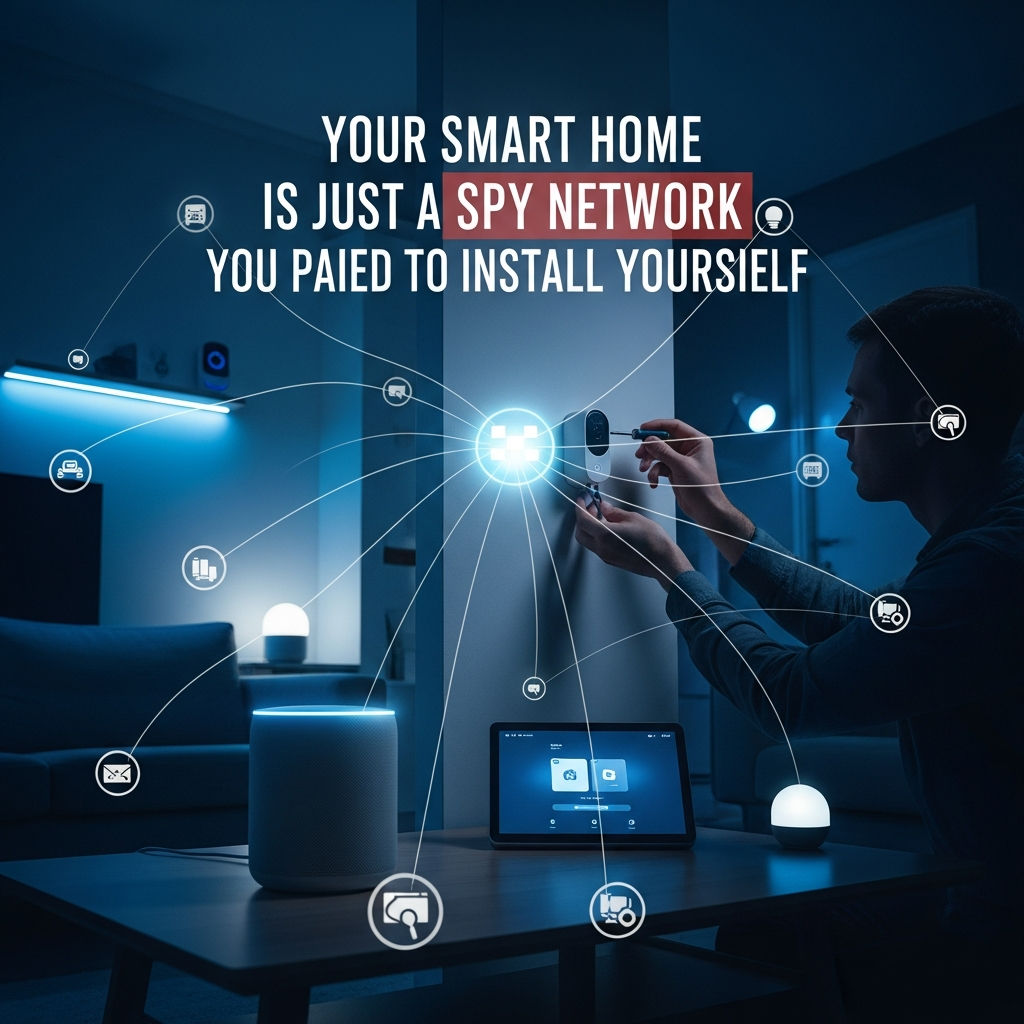
When you unbox that smart speaker or install that cloud-connected doorbell, you aren’t just upgrading your lifestyle. You are essentially paying a premium to install a sophisticated spy network in your most private sanctuary. The trade-off for convenience is your privacy, and for the tech giants of Silicon Valley, the data harvested from your living room is more valuable than the hardware you purchased.
The “Always On” Culture: Microphones and Cameras
The cornerstone of the smart home ecosystem is the voice assistant. Whether it’s Amazon Alexa, Google Assistant, or Apple’s Siri, these devices share a common requirement: they must be “always listening.” To react to a “wake word,” the device must constantly monitor the ambient sound in your home.
Smart Speakers: More Than Just Music
While manufacturers claim that these devices only record after the wake word is detected, numerous investigations and whistleblowers have revealed a different story. “False triggers” happen daily, recording private conversations, intimate moments, and even confidential business calls. These recordings are often uploaded to the cloud, where they may be transcribed and analyzed by human contractors to “improve the algorithm.” When you buy a smart speaker, you are placing a live microphone in your home that reports back to a corporate server.
Smart Doorbells and Indoor Cameras
Video surveillance is another pillar of the DIY spy network. Smart doorbells like Ring and Nest have turned residential streets into a patchwork of 24/7 surveillance. While marketed as security tools, these devices have a history of sharing footage with law enforcement without warrants and being accessible to employees within the companies themselves. If your camera is connected to the internet, it is a window that can be looked through by more than just you.
Data as the New Oil: How Your Behavior is Monetized
To understand why these devices are so heavily marketed, you must follow the data. In the digital economy, your habits, schedules, and preferences are products. Your smart home is a goldmine of behavioral data that companies use to build a comprehensive profile of who you are.
- Consumer Habits: Your smart fridge knows what you eat; your smart trash can knows what you throw away. This data is invaluable for targeted advertising.
- Lifestyle Patterns: Smart lights and thermostats track when you wake up, when you leave for work, and when you go to sleep. This allows companies to predict your routine with surgical precision.
- Health Insights: Sleep trackers and smart scales provide intimate biological data that could, in the wrong hands, influence insurance premiums or healthcare costs.
This isn’t just about showing you an ad for a new brand of detergent. It’s about Surveillance Capitalism—the process of translating human experience into behavioral data for the purpose of prediction and sales. You paid for the device, and now you are providing the raw material the company needs to make even more money.
The Security Nightmare: Entry Points for Hackers
Beyond corporate data harvesting, there is the very real threat of malicious third parties. The Internet of Things (IoT) is notorious for poor security standards. Many smart devices are rushed to market with “hardcoded” passwords, unencrypted data transmissions, and no way to update the firmware to patch vulnerabilities.
Every smart device you add to your network is a potential “entry point” for a hacker. A compromised smart lightbulb could give an attacker access to your Wi-Fi password. Once inside your network, they can intercept your personal emails, access your banking information, or even take control of your home’s security system. By filling your home with cheap, unvetted hardware, you are effectively leaving your digital back door unlocked.
The Legal and Ethical Gray Area: Terms of Service
When was the last time you read the “Terms of Service” for a smart plug? Probably never. These legal documents are often thousands of words long and written in dense legalese designed to discourage reading. However, within those pages, you often grant companies the right to:
- Share your data with “unnamed third-party partners.”
- Retain your voice and video recordings indefinitely.
- Change their privacy policies at any time without notice.
Furthermore, the legal protections for digital data are lagging far behind the technology. In many jurisdictions, data stored on a third-party server (the cloud) does not enjoy the same Fourth Amendment protections as physical papers in your desk. This means that your “spy network” can be subpoenaed, and your own home can testify against you.
How to Reclaim Your Privacy: Privacy-First Home Automation
Does this mean you need to rip the wires out of your walls and return to the 1950s? Not necessarily. It is possible to have a smart home without the surveillance, but it requires moving away from the “Big Tech” ecosystems. Here are steps you can take to protect yourself:
1. Use Local Control Instead of the Cloud
Look for devices that support local control. Platforms like Home Assistant or Hubitat allow you to automate your home without your data ever leaving your local network. If the device doesn’t need “the cloud” to function, your data stays in your house.
2. Segment Your Network
Set up a Guest Wi-Fi network or a separate VLAN specifically for your IoT devices. This ensures that even if a smart toaster is hacked, the intruder cannot jump over to your main computer or phone where your sensitive data lives.
3. Physical Privacy Barriers
If a device has a camera, ensure it has a physical shutter. If it doesn’t, a piece of black tape works wonders. For microphones, use the physical “mute” buttons where available, though be aware these are often software-based and can be overridden.
4. Choose Privacy-Focused Brands
Research brands that prioritize end-to-end encryption and have a proven track record of fighting for user privacy. Avoid “no-name” budget smart devices from overseas marketplaces, as these are the most likely to contain backdoors or malware.
Conclusion: The Cost of Convenience
The smart home is an incredible feat of engineering, but we must stop viewing it as a benevolent servant. It is a commercial tool designed to extract value from your private life. When you pay for the privilege of being monitored, you aren’t just a customer; you are the infrastructure of a global surveillance network.
As we move forward into an even more connected future, the most “intelligent” thing you can do for your home is to be skeptical. Question why a device needs an internet connection, read the privacy policy, and always remember that in the world of IoT, if you didn’t build the network to protect yourself, it was likely built to exploit you.
“`
